Sleep from six to twelve
School age sleep looks settled from the outside. Underneath, this is the age when snoring starts to matter, when legs ache at bedtime, and when a child who cannot switch off gets labelled as difficult. Here is what is ordinary and what is worth asking about.
How much sleep school age children actually need
Children aged 6 to 12 need 9 to 12 hours of sleep in every 24. The range is wide on purpose. It comes from a panel of sleep physicians rather than from a trial, so treat it as a guide, not a target to hit exactly.
Aged 6 to 12
Across a full 24 hours, including any sleep in the day.
Do not get it
Just under 4 in 10 US children this age sleep less than recommended. Parents reported the hours, so read it as an estimate.
Why three hours wide
Children the same age genuinely need different amounts. What matters is whether your child wakes rested and gets through the school day.
The child who cannot fall asleep
Lying awake at bedtime is common at this age. It is not evidence that you have done something wrong.
In a study of 700 children aged 5 to 12, about one in five had trouble sleeping according to their parents, and the rate was highest in girls aged 11 to 12, at just under a third. A study that used clinical interviews rather than questionnaires found lower figures, closer to one in ten. The gap between those numbers is mostly a difference in how the question was asked.
Behavioural approaches, often called CBT for insomnia, are the usual first step, and a reasonable one. It helps to know the evidence at this age is thinner than it sounds. There are only two randomised trials in school age children, and pooled results show them falling asleep around 19 minutes sooner, with total sleep and daytime sleepiness barely moving. These methods do help children settle faster. They are not the settled science they are often presented as.
Half an hour is the number to watch
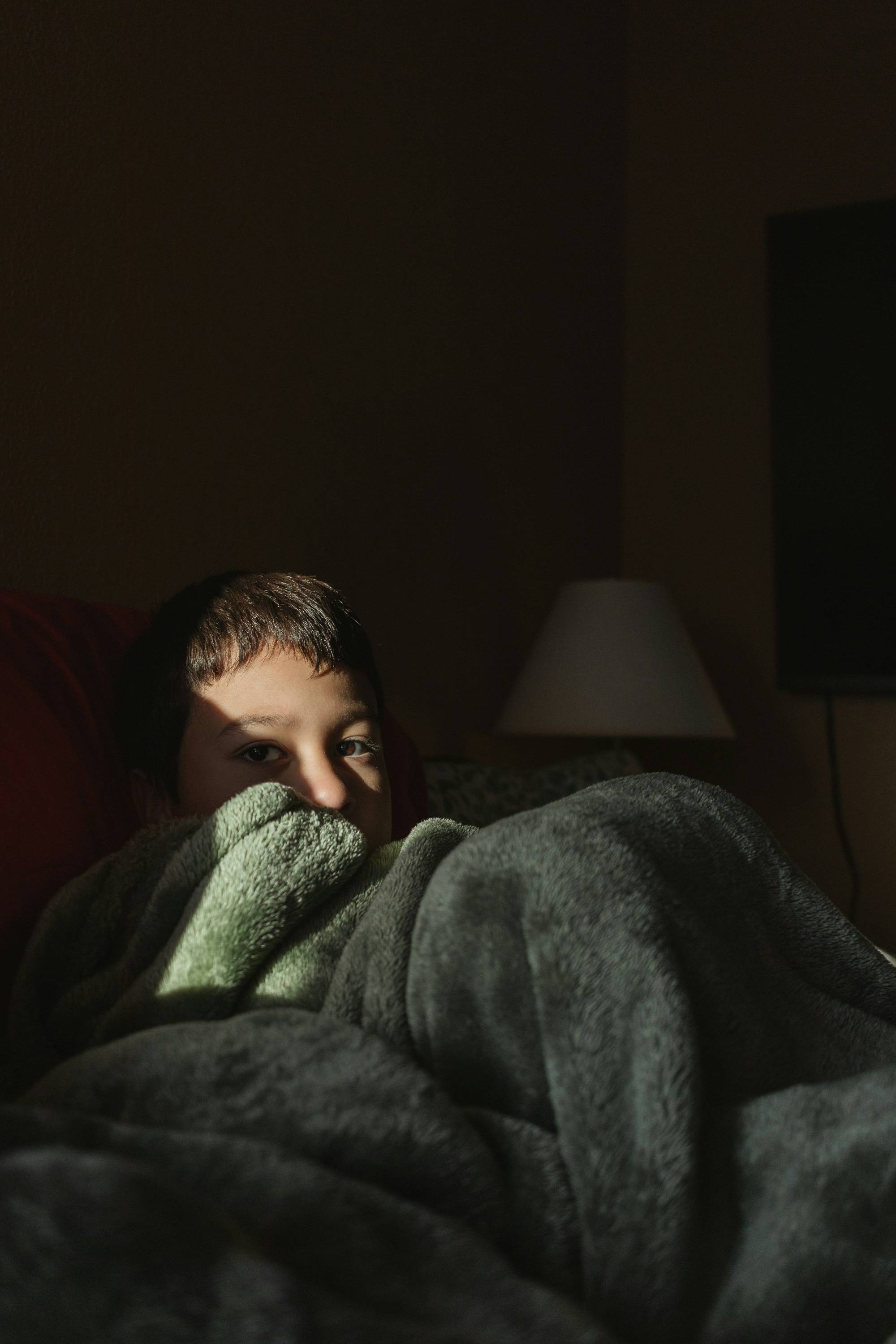
Most children this age take a while to settle, and that is normal. It is worth raising with your clinician when falling asleep regularly takes longer than about thirty minutes, or when your child wakes in the night and cannot settle again.
Snoring is not just noise
This is the age when breathing problems in sleep tend to show up, and snoring is the sign most often waved away.
About 7 in 100 children snore on most nights, and 1 to 4 in 100 have obstructive sleep apnea confirmed on a sleep study. Tonsils and adenoids are at their largest relative to the airway between about two and eight years, which is why this is the age group where these problems appear.
Where a child has apnea and enlarged tonsils, surgery is the recommended first treatment, and it is worth knowing what it does before you are asked to decide. In a trial of 464 children aged 5 to 9, surgery improved breathing, behaviour, symptoms and quality of life, and sleep studies returned to normal in 79 percent of them. What it did not improve was attention, in that trial or in a second one.
One finding gets left out of most conversations. Of the children who did not have surgery, 46 percent had normal sleep studies seven months later anyway. Watchful waiting is a real option for some children, and that decision belongs with your child's own clinician.
- Snoring on most nights, not just with a cold
- Pauses in breathing, gasping, or snorting
- Breathing through the mouth while asleep
- Very restless sleep, or sleeping in odd positions
- Morning headaches
- Bedwetting that returns after your child was dry
- Daytime sleepiness, or trouble focusing and sitting still
Growing pains, or restless legs
An uncomfortable, restless feeling in the legs at bedtime that eases when your child moves is not the same thing as growing pains, and it has a name.
In a survey of 10,523 families, 1.9 percent of children aged 8 to 11 met the criteria for restless legs syndrome. Two details from that study are useful at home. Around 8 in 10 of the affected children had a history of what the family called growing pains, and more than 7 in 10 had at least one parent with the same symptoms. If this sounds familiar from your own childhood, say so to the clinician.
Iron is usually where the conversation goes next, and the evidence there is softer than it sounds. Current guidance suggests iron for these children but rates that recommendation as conditional, with very low certainty, and the ferritin threshold most often quoted came across largely from adult data.
Please do not start iron on your own. It needs a blood test first, and too much iron is harmful. This one is a conversation for your child's clinician.
Screens in the evening
Screens are the first thing most families are told to cut. The evidence is weaker than the confidence behind that advice.
A review of 67 studies in children aged 5 to 17 found that 90 percent reported a link between screens and worse sleep, but almost all of them simply observed children at one point in time. There is no randomised trial in children aged 6 to 12 showing that cutting screens improves their sleep. The largest careful analysis, covering more than 50,000 children and young people, found around 3 minutes less sleep for each hour of screen time.
None of that makes screens harmless. It changes where to aim. A device in the bedroom overnight, notifications left on, and something exciting in the last half hour are all worth changing. Counting total hours is probably not the lever it is sold as.

Aim at the last half hour
The part worth changing is narrow. The device charges outside the bedroom, notifications go off, and whatever happens in the last half hour before bed stays calm. That is easier to agree on with a nine year old than a daily limit, and it is closer to what the evidence supports.
Melatonin at this age
Melatonin has become ordinary in family medicine cabinets. It is worth pausing before it becomes routine in yours.
In a survey of US parents, about 1 in 5 children aged 5 to 13 had used melatonin in the previous month, and preteens who used it had been taking it for a median of 21 months.
The first thing worth knowing is what is in the bottle. When researchers tested 25 melatonin gummies, 22 were inaccurately labelled, with actual content running from 74 to 347 percent of the label. One contained no melatonin at all.
The second is how much it does. Pooling eight trials in children with long standing insomnia, melatonin brought sleep forward by about 18 minutes and added about 30 minutes of sleep, with the certainty of that evidence rated low to very low. The authors were direct that it should never be the first thing tried at this age.
Treat it like any other medicine. Keep it out of reach, speak to a pediatric health professional before giving it, and choose a product carrying the USP Verified Mark.
Tired, or not paying attention
Sleep and school performance are linked, and that link is smaller than most headlines suggest.
Across studies covering ages 8 to 18, daytime sleepiness predicted school performance better than either sleep quality or sleep length did, and all three effects were small. More hours in bed does not straightforwardly produce better grades.
The overlap that matters more is with attention. Pooling 18 studies, children with breathing problems in sleep and children with ADHD symptoms looked considerably alike. That does not mean breathing explains most attention difficulties. It does mean a child being assessed for attention problems is worth asking about snoring first.
Tired does not always look tired
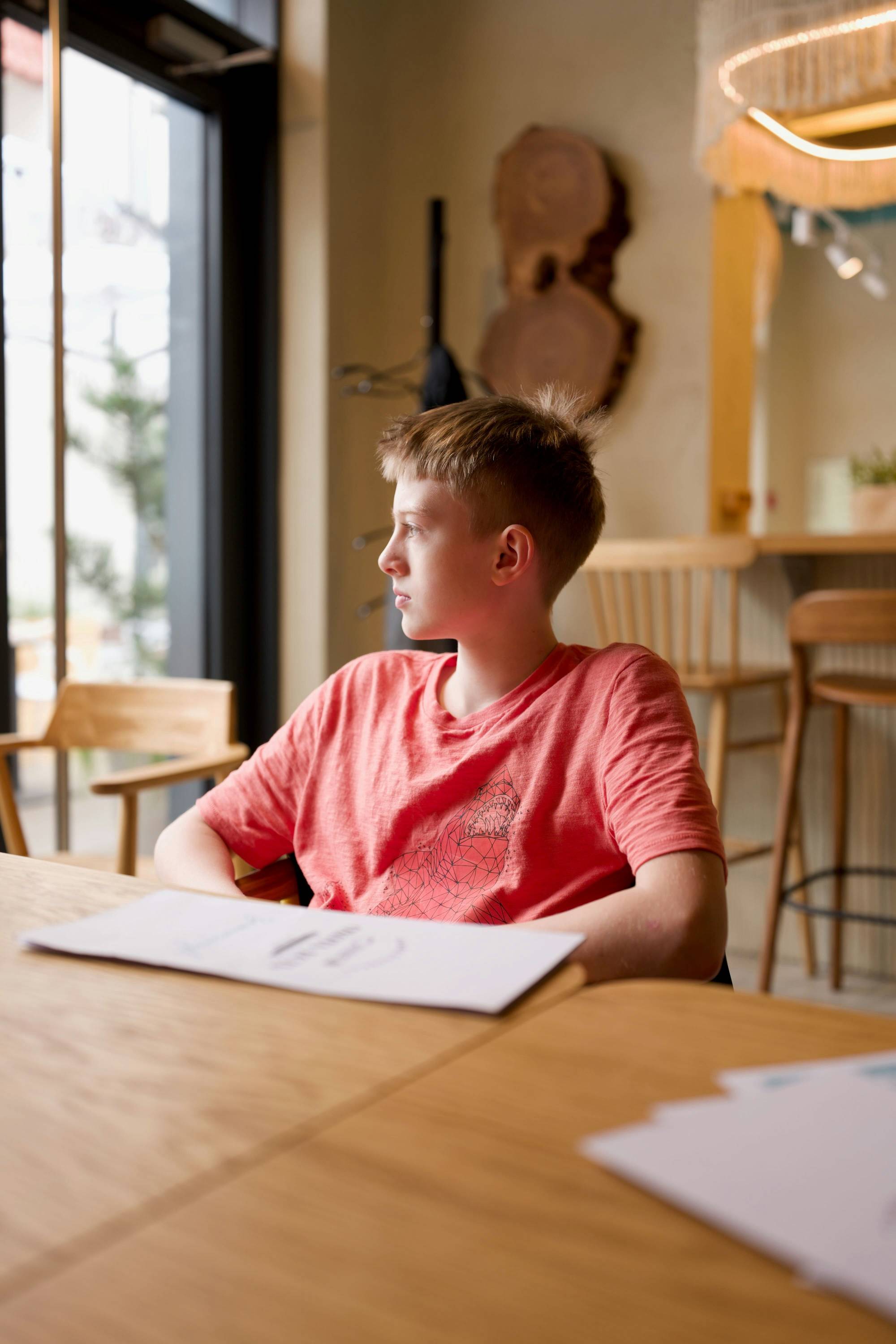
A tired nine year old often does not yawn or slow down. They fidget, lose focus, or get irritable, which can look like a behaviour problem rather than a sleep one. It is one reason sleep is worth raising before anything else is concluded.
Worth mentioning at your next visit
None of these mean something is wrong. All of them are worth saying out loud to your child's clinician rather than waiting to be asked.
- Snoring most nights, or pauses in breathing
- Legs that ache or feel restless at bedtime
- Taking longer than about 30 minutes to fall asleep, most nights
- Waking in the night and being unable to settle again
- Sleepiness during the day, or falling asleep at school
- A change in mood, attention or behaviour alongside a change in sleep
- Melatonin used for more than a few weeks
- Headaches in the morning

OWL magazine, Owlkids
The Sleep Health Organization in the Insider section, on why having trouble falling asleep is common.
Dr. Anya McLaren-Barnett is one of the physicians behind this health resource for families, written by Black providers.
Have another child at a different age?
What is normal at six months is not normal at twelve years. Each age has its own page.
Where this comes from
- Paruthi S, et al. Recommended amount of sleep for pediatric populations: a consensus statement of the American Academy of Sleep Medicine. Journal of Clinical Sleep Medicine, 2016;12(6):785 to 786. Source of the 9 to 12 hour range.
- Claussen AH, et al. Short sleep duration: children's mental, behavioral, and developmental disorders and demographic, neighborhood, and family context. Preventing Chronic Disease, 2023;20:220408. Source of the 37.5 percent figure, National Survey of Children's Health 2016 to 2019.
- Calhoun SL, et al. Prevalence of insomnia symptoms in a general population sample of young children and preadolescents. Sleep Medicine, 2014;15(1):91 to 95.
- Falch-Madsen J, et al. Prevalence and stability of insomnia from preschool to early adolescence. BMJ Paediatrics Open, 2020;4(1):e000660.
- Aslund L, et al. Cognitive and behavioral interventions to improve sleep in school-age children and adolescents: a systematic review and meta-analysis. Journal of Clinical Sleep Medicine, 2018;14(11):1937 to 1947.
- Lumeng JC, Chervin RD. Epidemiology of pediatric obstructive sleep apnea. Proceedings of the American Thoracic Society, 2008;5(2):242 to 252.
- Marcus CL, et al. Diagnosis and management of childhood obstructive sleep apnea syndrome. Pediatrics, 2012;130(3):576 to 584.
- Marcus CL, et al. A randomized trial of adenotonsillectomy for childhood sleep apnea. New England Journal of Medicine, 2013;368(25):2366 to 2376. Source of the 79 percent and 46 percent figures.
- Redline S, et al. Adenotonsillectomy for snoring and mild sleep apnea in children: a randomized clinical trial. JAMA, 2023.
- Picchietti D, et al. Restless legs syndrome: prevalence and impact in children and adolescents. Pediatrics, 2007;120(2):253 to 266.
- Winkelman JW, et al. Treatment of restless legs syndrome and periodic limb movement disorder: an American Academy of Sleep Medicine clinical practice guideline. Journal of Clinical Sleep Medicine, 2025;21(1):137 to 152.
- Allen RP, et al. Evidence-based and consensus clinical practice guidelines for the iron treatment of restless legs syndrome in adults and children. Sleep Medicine, 2018;41:27 to 44.
- Hale L, Guan S. Screen time and sleep among school-aged children and adolescents: a systematic literature review. Sleep Medicine Reviews, 2015;21:50 to 58.
- Przybylski AK. Digital screen time and pediatric sleep: evidence from a preregistered cohort study. Journal of Pediatrics, 2019;205:218 to 223.
- Hartstein LE, et al. Characteristics of melatonin use among US children and adolescents. JAMA Pediatrics, 2023.
- Cohen PA, et al. Quantity of melatonin and CBD in melatonin gummies sold in the US. JAMA, 2023;329(16):1401 to 1402.
- Edemann-Callesen H, et al. Use of melatonin in children and adolescents with idiopathic chronic insomnia: a systematic review, meta-analysis, and clinical recommendation. EClinicalMedicine, 2023;61:102048.
- American Academy of Sleep Medicine. Health advisory: melatonin use in children and adolescents. Adopted 2022, published in Journal of Clinical Sleep Medicine, 2022;18(12):2857 to 2859.
- Dewald JF, et al. The influence of sleep quality, sleep duration and sleepiness on school performance in children and adolescents: a meta-analytic review. Sleep Medicine Reviews, 2010;14(3):179 to 189.
- Sedky K, et al. Attention deficit hyperactivity disorder and sleep disordered breathing in pediatric populations: a meta-analysis. Sleep Medicine Reviews, 2014;18(4):349 to 356.
This page provides educational and informational content on pediatric sleep health for general purposes only. Nothing here constitutes medical advice, a clinical diagnosis, or a substitute for professional medical consultation. Parents and caregivers should consult their child's physician before changing care or treatment. In a medical emergency, contact your local emergency services immediately.
FREE DOWNLOAD
Where should we send your melatonin guide?
Melatonin is one of the most common things parents reach for once a child is past infancy, and one of the least understood. This guide covers what it does, what it does not do, and what to ask your clinician.